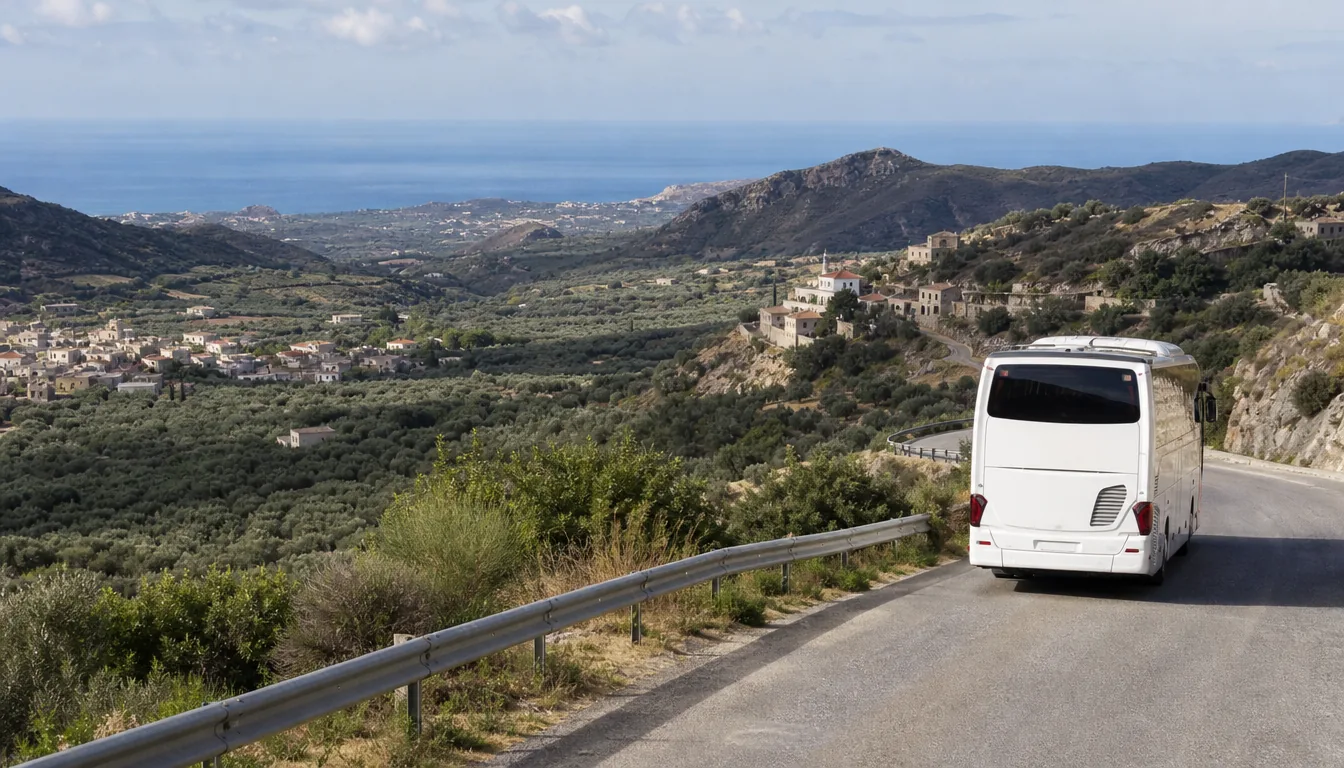
Booking choice: The day trip from Chania, from $33 per person. Check dates Tour details
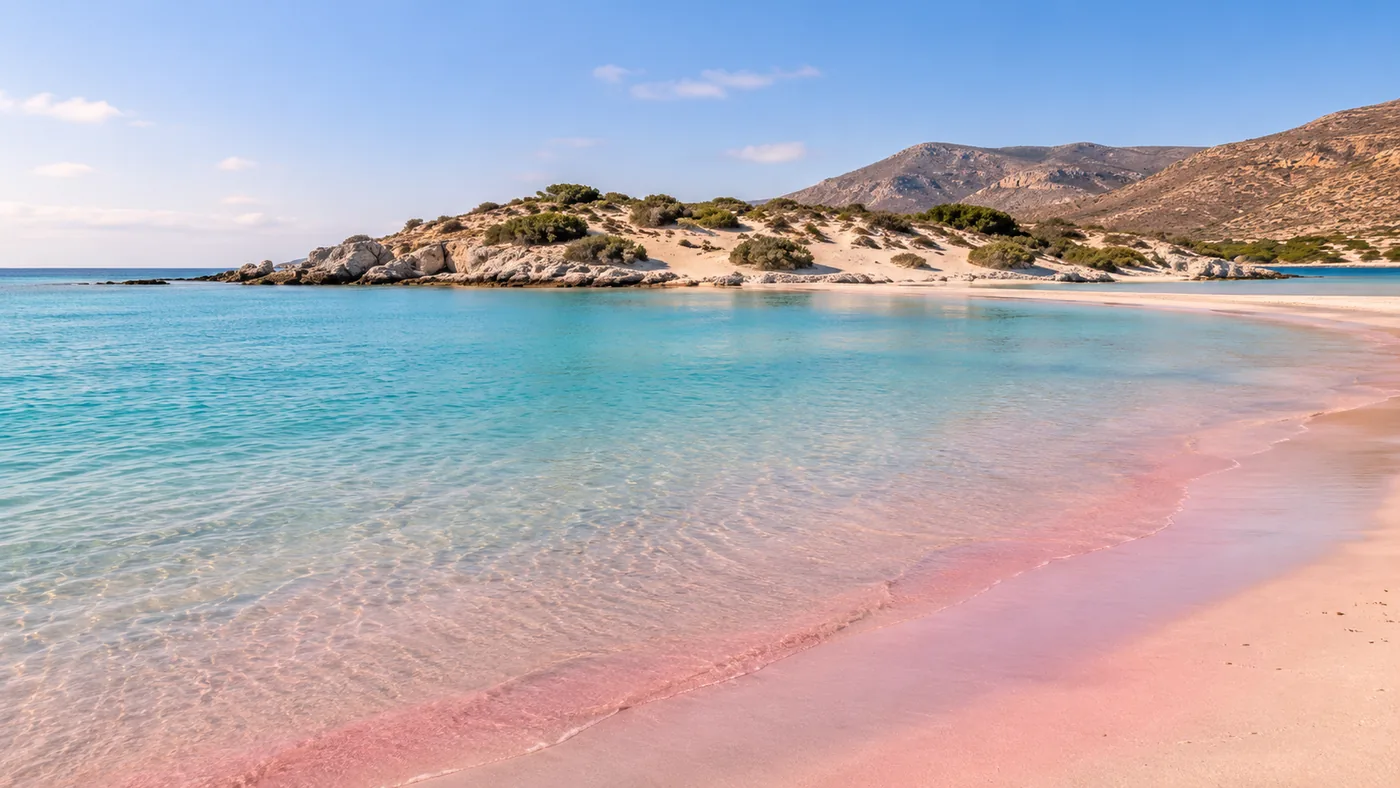
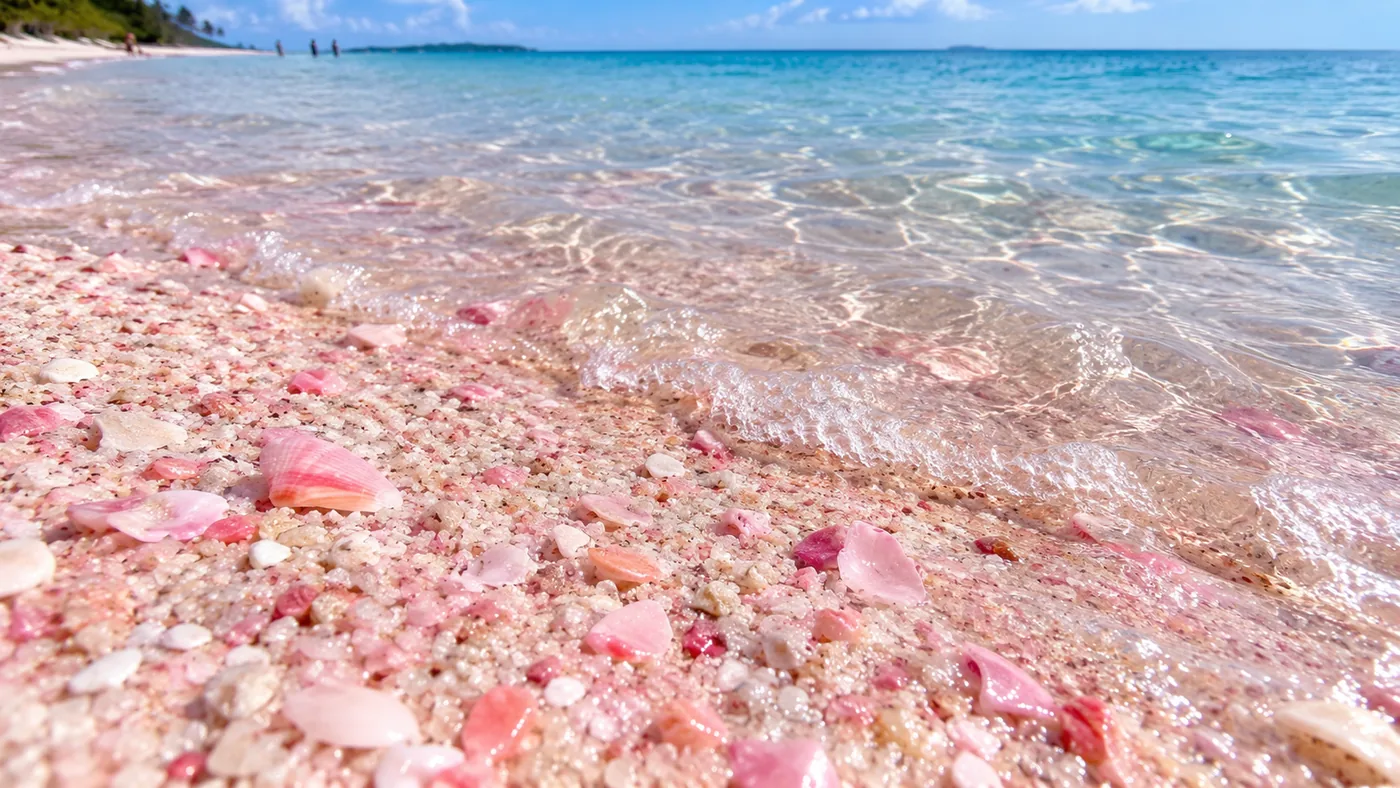
"Pink sand beach" is the phrase that put Elafonisi on so many lists, and it is true, with one detail the photos skip: the pink is a tint, not a paint job. It comes and goes with the waterline, the light and the spot you stand on.
Here is what makes the color, where to find the most of it, when it shows best, why you leave every grain behind, and how to photograph it.
The quick answer
The pink comes from pigmented microorganisms that live with the native seaweed (Wikipedia), usually described as foraminifera: single-celled creatures with tiny shells. Tides and waves wash the broken shells in among the white grains. The tint is strongest along the waterline and in sheltered spots, not across the whole beach, and taking sand, shells or plants is forbidden.
Why is Elafonisi Beach pink?
Because of tiny shells. Wikipedia credits tidal and wave-borne deposits of pigmented microorganisms that live with the native seaweed; these are foraminifera, and their broken red and pink shells tint the white sand.
Foraminifera are single-celled organisms that build a small shell around themselves. Many live on seaweed and on the sea floor. When they die, the sea grinds their shells into fragments and the tide and the waves sort them onto the beach with the ordinary pale grains. Enough of those fragments together, and the sand turns rose.
Shells of every kind help. CNN Greece, reporting the vehicle ban in April 2023, noted that the plants, shellfish and dead shells are what give the water its many colors and build the low sandbanks in it. The bus day trip's listing puts it in four words: "created by crushed seashells".
Is Elafonisi sand pink everywhere?
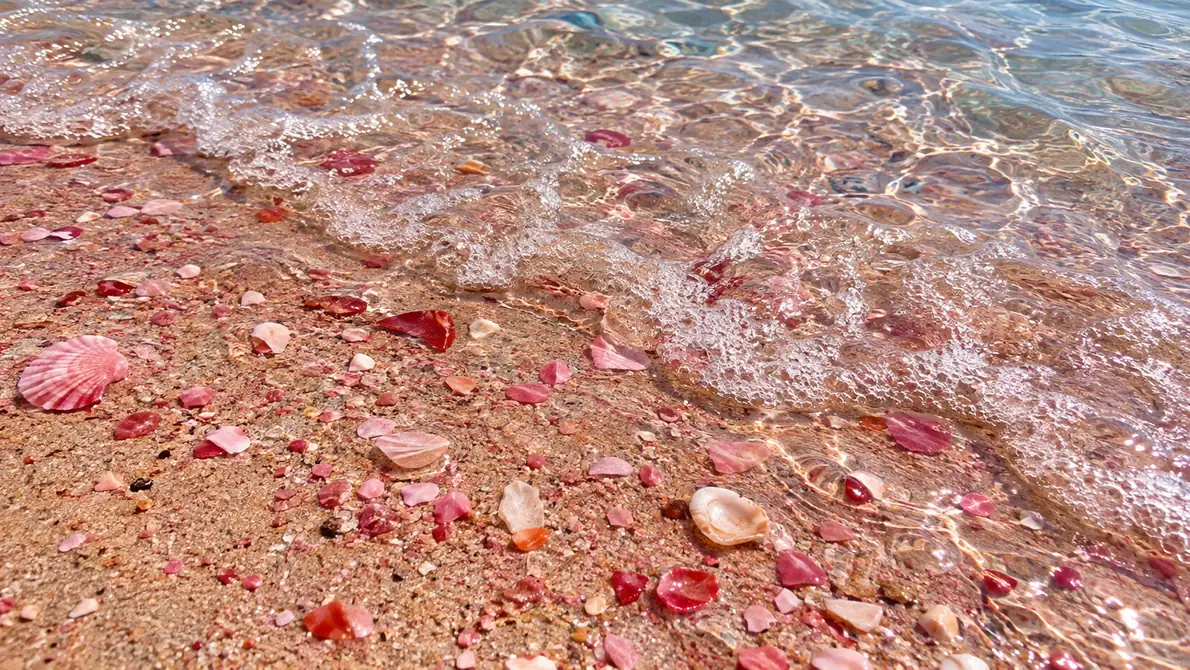
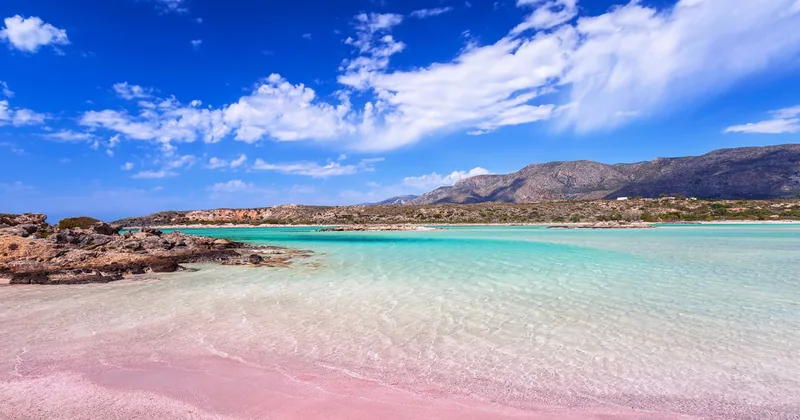
No. The pink shows in streaks and patches, mostly along the waterline. Away from the water the sand looks white or pale gold.
Think of a pink edge rather than a pink beach. The strongest color runs in bands where the small waves leave their load, and in curves along the lagoon where the water is calm. Dry sand further up the beach looks pale, and wet sand looks deeper.
That is part of the fun: you go looking for it. Jianchong took the bus day in Sep 2022: "about 4 hours on the beach. The beach is really pink [...]"
Where is the pinkest sand at Elafonisi?
At the water's edge and in the sheltered spots: along the shallow lagoon between the beach and the island, and in the island's quieter coves.
Start at the lagoon. The water there is shallow, usually knee-deep or less, and you can wade across to the island in fine weather (Wikipedia). Walk the shoreline slowly and look down where the water thins out over the sand. Then cross over and follow the island's beaches; the far side has small coves where the color collects.
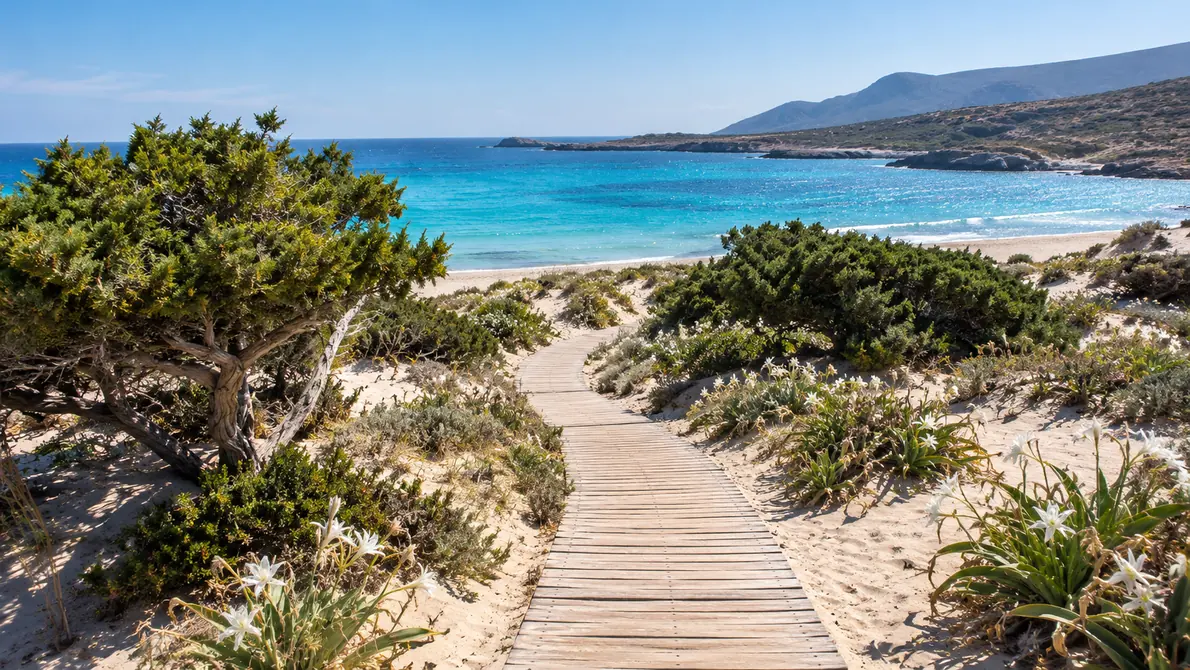
Stay on the sand and the marked paths as you go. The dunes and the juniper bushes behind the beach are part of the protected area, and the day trip from Rethymno says it plainly on its listing: it is forbidden to enter the sand dunes.
When does the pink show most?
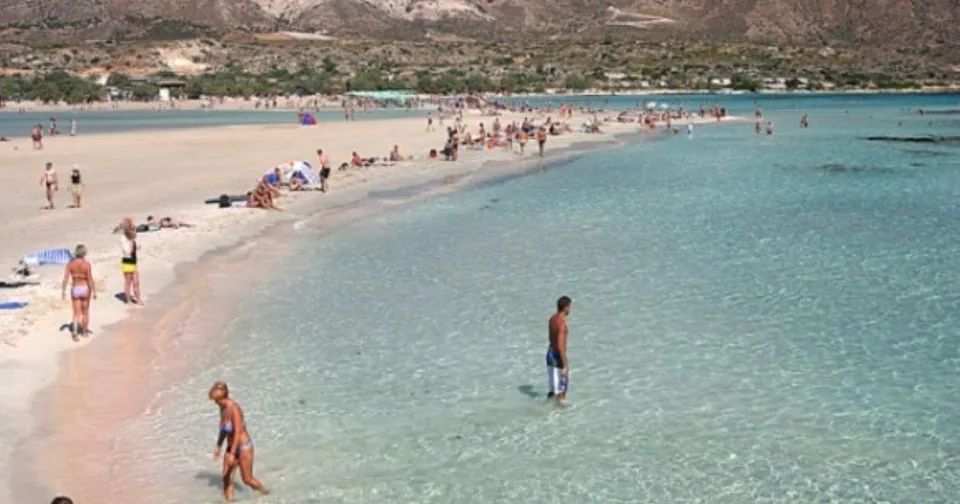
When the sand is wet and the light is low. The tint looks richer at the waterline after a wave pulls back, and in the softer light of the morning and the evening.
Midday sun flattens colors, pink included. Coach days reach the beach in the late morning and stay into the afternoon, which still gives you hours to walk the waterline: the day trip from Chania gives you 4 full hours. For the evening light, the sunset catamaran sails from Paleochora at 17:00 and swims at Elafonisi as the day ends.
The light changes day to day, so treat this as a tip, not a promise. Wet sand is the one thing you can count on: crouch where the last wave reached.
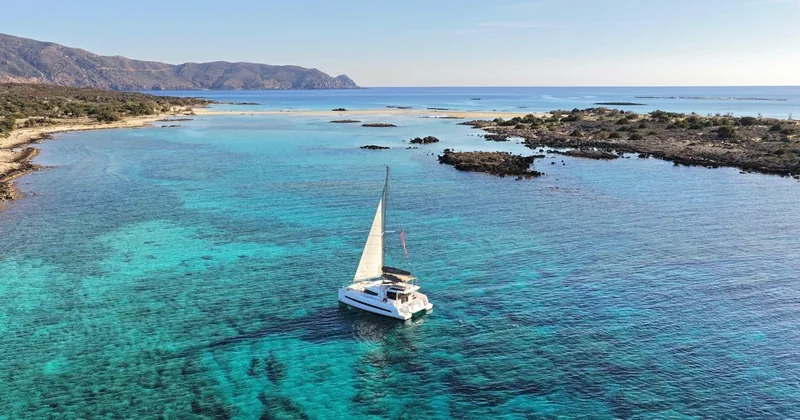
Elafonisi in the evening from the water: a swim stop, prosecco, sunset bites and an open bar, with a transfer from the Chania coast.
Explore the sunset catamaran Tour detailsCan you take pink sand from Elafonisi?
No. Elafonisi is a protected Natura 2000 area, and taking sand, shells or plants is forbidden. Leave every grain where it is.
CNN Greece spelled out the rule in 2023: you may not take or damage plants or shellfish, not even dead shells. The day trips repeat it. The catamaran listing asks guests not to take sand, shells or plants, and the Rethymno listing says that, due to environmental law, it is forbidden to take sand from the beach.
The rules sit on a Joint Ministerial Decision (Government Gazette 752D/2023), and violations fall under Article 30 of Law 1650/1986 (Patris, 6 May 2025). The simple habit: shake out your towel and your shoes before you walk back to the parking. A photo carries the color home better than a jar would.
Where is the pink beach in Greece?
Elafonisi, in the south-west corner of Crete, is the pink beach most people mean. It lies in the municipality of Kissamos, in the regional unit of Chania.
When people search for the pink beach in Greece, the photos they find are nearly always Elafonisi: the lagoon, the island and the rose-colored edge. One mix-up to avoid: Elafonisos is a different island, in the Peloponnese.
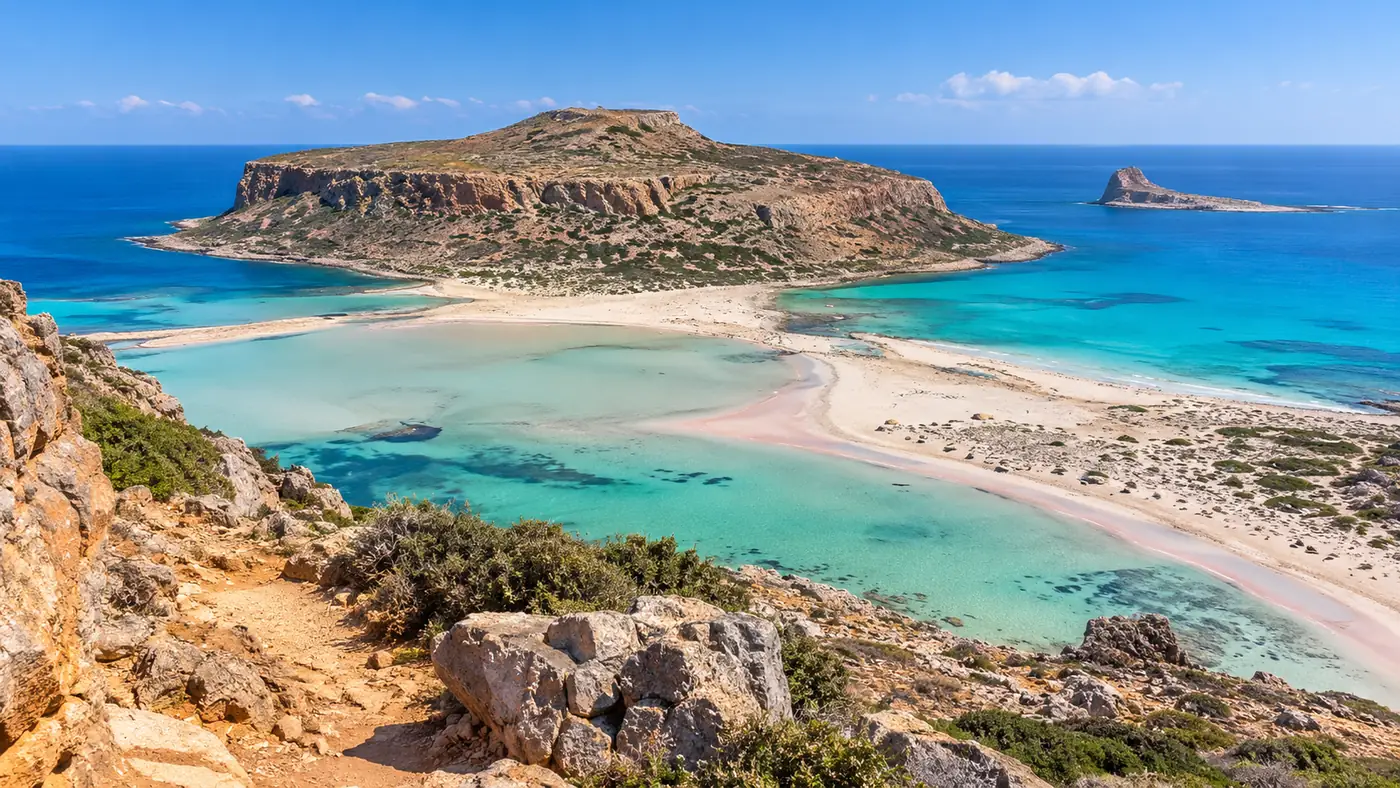
Its north-coast rival in Crete is Balos, a shallow lagoon on the Gramvousa peninsula. The two are compared in Elafonisi vs Balos.
How do you photograph the pink sand at Elafonisi?
Get low, shoot the waterline and let the wet sand do the work. Early or late light helps, and a polarizing filter cuts the glare off the water.
- Go low. Hold the camera close to the sand at the water's edge so the pink fills the front of the frame and the turquoise sits behind it.
- Wait for the wave to pull back. Wet sand shows the color best, for a second or two.
- Cut the glare. A polarizing filter, or simply turning so the sun is to one side, deepens both the blue and the pink.
- Look for the patterns. The pink runs in curves and bands along the shore. They make better pictures than a wide shot of the whole beach.
- Keep it in the frame, not in your bag. Photograph the shells, leave them on the sand.
Pickup across the Chania area and 4 full hours on the pink sand, with a free umbrella and a honey and wine stop.
Check dates for the day trip from ChaniaWhy is Elafonisi a protected area?
For its rare habitats: the island, the dunes, the junipers and the sea around them. Elafonisi is part of the Natura 2000 network, and its own zone bans vehicles near the beach.
The Natural Environment and Climate Change Agency lists the island and its coastal sea zone as a Natura 2000 site. A Joint Ministerial Decision of 2023 split the wider area into seven zones; Elafonisi and the shore opposite it are Zone A3, and the cedar forest of Kedrodasos is Zone A2 (Patris, 6 May 2025). The monitoring committee reported in April 2025 that the habitats were in better condition since the measures began.
What it means for you is short: walk from the official parking, stay off the dunes, leave the sand and shells. The facilities and rules guide has the full list, and the 2026 rules post follows what changes.
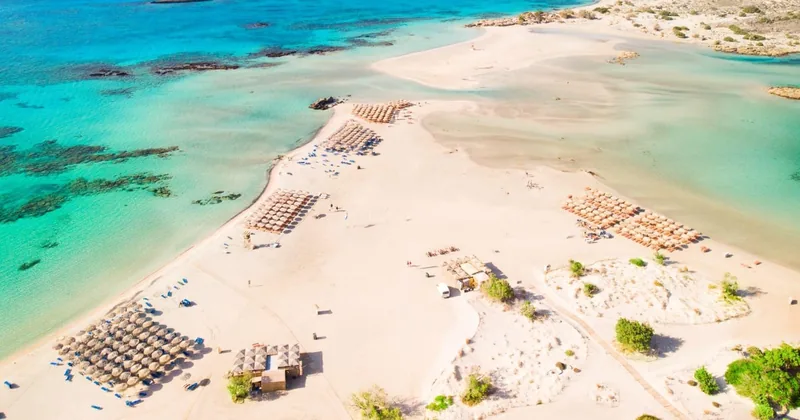
The most booked day from Chania: a modern coach, a honey and wine tasting, 4 full hours on the beach with a free umbrella, and an hour in Elos.
Explore the day trip from Chania Tour detailsFrequently asked questions
Is Elafonisi sand really pink?
Yes, in places. The pink shows as a tint along the waterline and in sheltered spots; further up the beach the sand looks white.
What makes the sand at Elafonisi pink?
Tiny shells of pigmented microorganisms called foraminifera, which live with the native seaweed. Waves and tides break them up and mix them into the white sand.
Is it illegal to take sand from Elafonisi?
Yes. Elafonisi is a protected Natura 2000 area, and taking sand, shells or plants is forbidden.
When is the best time to see the pink sand?
When the sand is wet and the light is low: at the waterline after a wave, in the morning or the evening.
Ready to book
Choose your day trip
Free cancellation up to 24 hours before on every option. Prices are from-prices in USD and move with the season.
Elafonisi from Chania: Free Umbrella, Honey & Wine
- Coach day from the Chania area
- 4 full hours at Elafonisi
- Free umbrella, no fee and no deposit
Elafonisi Sunset Catamaran with Bites & Drinks
The beach after the day crowds leave, with prosecco
Elafonisi & Falasarna Small-Group Day with Snacks
- Small group, hotel pickup in Chania
- Elafonisi and Falasarna
- Snack box, beer, wine and soft drinks